

How to Get Rid of Skunk Smell (on Pets, and Around the House)
It usually happens at the worst possible time — the dog goes out at 11pm, there's a yelp, and moments later the whole house reeks. Skunk spray is one of the most stubborn odors you can deal with, and most of the folk remedies people reach for make it worse. Here is what actually works to get skunk smell off a pet, out of fabric, and away from the house, and why.
First, Why Skunk Smell Is So Hard to Remove
Skunk spray is an oily musk made of sulfur compounds called thiols. Two things make it miserable to deal with: the thiols are extraordinarily potent even in tiny amounts, and the spray is oily, so it clings to skin, fur, and fabric and resists plain water. Worse, when thiols get wet without being chemically neutralized, they can reactivate — which is exactly why a dog that was bathed with water alone smells all over again days later in the rain. The goal is not to mask the smell or wash it away, but to chemically change the thiols into odorless compounds.
Why Tomato Juice Doesn't Work
The famous tomato-juice bath is a myth. It doesn't neutralize the thiols at all — it just temporarily overwhelms your nose (a phenomenon called olfactory fatigue) so you stop noticing the skunk smell while you're surrounded by tomato. The odor is still there, and now you also have a red, dripping dog. Skip it, along with plain water, which as noted can make things worse.
The Formula That Actually Works
The proven home remedy is a peroxide-and-baking-soda mixture that chemically neutralizes the thiols. Mix it fresh and use it immediately:
- 1 quart of 3% hydrogen peroxide (the standard drugstore strength).
- 1/4 cup of baking soda.
- 1 to 2 teaspoons of liquid dish soap, which cuts the oil so the mixture can reach the thiols.
- For a large dog, scale the recipe up proportionally so you have enough to cover the coat.
Mix it in an open container right before use — never store it, as it releases gas and can burst a sealed bottle. Work it into the dry (not pre-wetted) coat, keeping it well away from the eyes, nose, and mouth, let it sit about 5 minutes, then rinse thoroughly. Repeat if the odor lingers. A few cautions: peroxide can lightly bleach dark fur, so test a small spot first, and don't leave it on longer than needed. For a cat, or if spray got in the eyes, call your veterinarian rather than improvising.
Getting Skunk Smell Out of the House and Fabric
If your pet ran back inside, or a skunk sprayed near or under the house, the odor spreads to everything porous:
- Clothing and washable fabric: wash with regular detergent plus a half-cup of baking soda, and air-dry rather than machine-drying until the smell is gone, since heat can set it.
- Ventilate aggressively: open windows, run fans, and move air through the house — skunk odor is far easier to clear with airflow than to cover up.
- Air the space, don't just spray perfume: air fresheners only mask thiols. Enzyme-based or oxidizing odor products designed for skunk are what actually break them down.
- Hard surfaces: wipe down affected surfaces with a diluted oxidizing cleaner rather than plain water.
- Set out bowls of baking soda, activated charcoal, or white vinegar in a sprayed room to help absorb residual odor over a few days.
When the Smell Keeps Coming Back
Here is the part most odor guides miss: if the skunk smell around your house keeps returning even after you've cleaned everything, you very likely don't have an odor problem — you have a skunk problem. A skunk denning under your deck, porch, shed, or crawl space produces a persistent musky smell even without a full spray, and every time it's startled the odor spikes again. No amount of peroxide, airing out, or odor product will fix a smell that has a live source under your house.
Skunk smell that keeps coming back usually means one is denning under your deck or porch. We remove the animal, seal the den, and treat the odor at its source.
Explore Skunk Removal in Overland ParkSigns the Odor Has a Source
- A musky smell that lingers day after day and is strongest near a deck, shed, porch, or crawl space rather than on a specific sprayed item.
- The odor spikes at night or when there's activity in the yard, when a denned skunk is disturbed.
- A burrow 6 to 8 inches across with a fan of dug-out dirt under a structure.
- Cone-shaped holes and shallow diggings across the lawn from a skunk rooting for grubs.
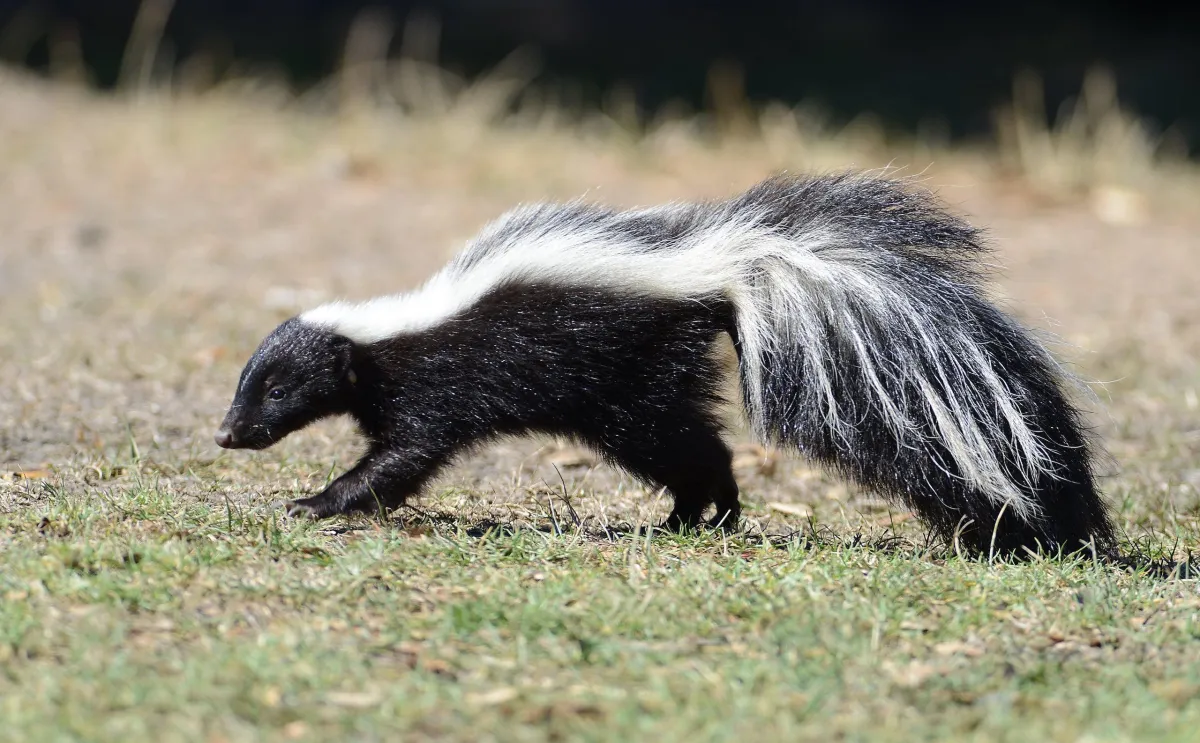
- Nighttime sightings of a black-and-white animal moving slowly across the yard.
If those sound familiar, cleaning up the smell is only half the job. Skunks are also one of the primary rabies vector species in Kansas, so a denned skunk against your home is a safety issue as well as an odor one, and it should never be handled directly. Frontier Trapper removes the skunk humanely and legally, seals the den site so another can't move in, and treats the source odor and contamination — so the smell actually stays gone. For more on the denning side, see our guide on skunks denning under a deck.