
Skunk Removal & Control in Overland Park, KS

Skunk Removal & Control in Overland Park, KS

That Smell and a Hole Under the Deck? You Have a Skunk

When a lingering musky odor settles over the yard, you find a burrow dug under the deck, shed, or porch, and cone-shaped holes appear in the lawn overnight, a skunk has almost certainly moved in. Skunks are drawn to the sheltered spaces beneath structures and the easy grubs, insects, and food our yards provide, and they are especially likely to den under a deck or shed in late winter and spring when females are preparing to raise young. Once a skunk is established against your home, the spray risk to people and pets, and the odor, make it a problem most homeowners want handled fast.

A skunk is wildlife, not a pest you can spray away, and because skunks are a primary rabies vector species in Kansas and their spray is a genuine hazard, this is not a safe do-it-yourself job. Lasting relief comes from humane, licensed trapping or eviction, sealing off the den, and removing what drew the skunk in. Frontier Trapper handles skunk conflicts the right way: we remove the animals in compliance with Kansas wildlife regulations, exclude the den site, and treat the odor so a new skunk does not simply move back in. Below is how to recognize skunk activity, why Overland Park properties attract them, what removal costs locally, and how we resolve it for good.

What a Skunk Looks Like (and the Warning Before It Sprays)

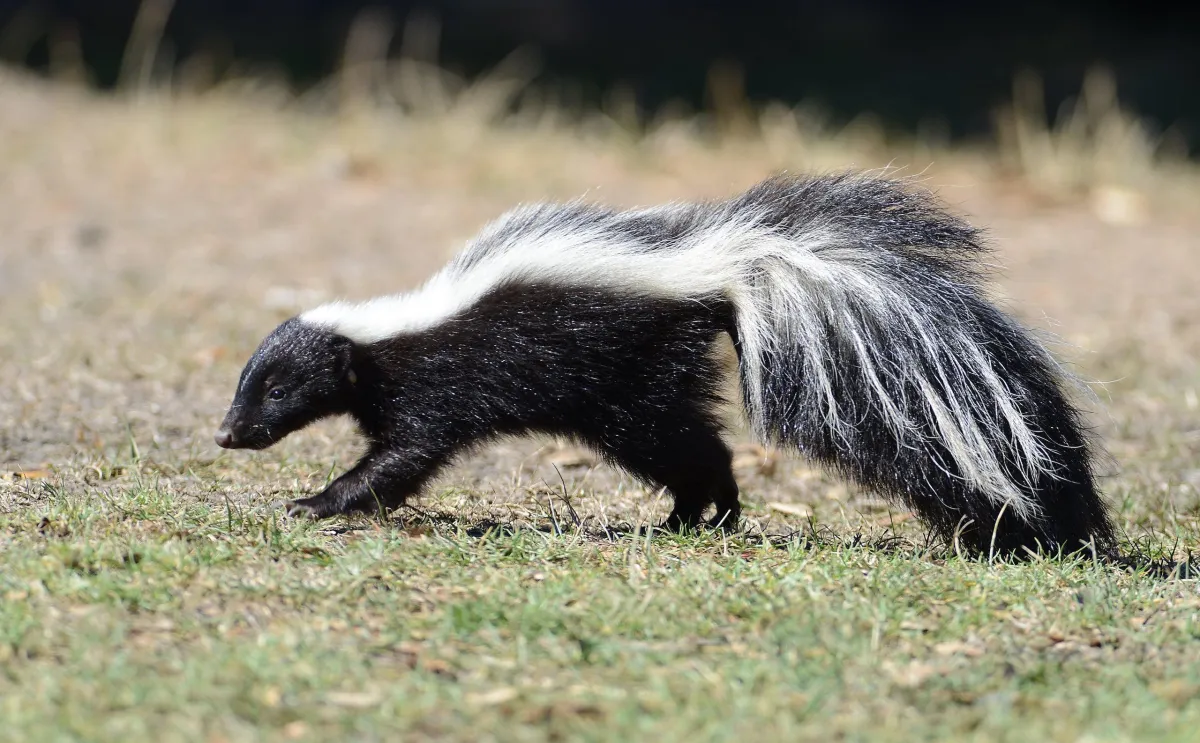
The striped skunk is the species found throughout Overland Park, and it is one of the easiest animals to identify, though the more important thing to recognize is the warning it gives before spraying:

Cat-sized and stocky. Striped skunks are about the size of a house cat, with a stout body, short legs, and a fluffy tail.
Black with white stripes. Glossy black fur with a white stripe down the head that splits into two stripes along the back is unmistakable.
A raised-tail warning. Before spraying, a skunk stamps its front feet, hisses, arches its back, and raises its tail; if you see this, back away slowly, it is about to spray.
Accurate, long-range spray. Skunks can spray a pungent, oily musk up to about 10 feet with surprising accuracy, and the odor clings to skin, fur, and fabric.
Slow and nocturnal. Skunks are unhurried, poor climbers, and mostly active at night, so you often smell or see the digging before you see the animal.
Striped skunk with raised tail near a deck in Overland Park, KS

Know the Warning Signs

A striped skunk's black-and-white coat is unmistakable, and its foot-stamping, tail-raising display is the warning it gives before spraying. Recognizing a den under the deck early, and never cornering the animal, is what avoids a spray and a bigger problem.

Why Overland Park Properties Get Skunks

Skunks are highly adaptable and find suburban Overland Park and the wider Johnson County area full of shelter and food:

Shelter under structures. The spaces under decks, sheds, porches, crawl spaces, and concrete slabs are prime denning sites, especially for females raising young.
Grubs and insects. Lawns rich in grubs, earthworms, and insects are a favorite food source and the reason for all that cone-shaped digging.
Easy human food. Pet food left outdoors, unsecured garbage, fallen birdseed, compost, and pet doors that lead to food all draw skunks in.
Cover and clutter. Wood piles, brush, and stored materials near the house provide additional shelter and travel cover.
Mild denning conditions. Suburban yards offer protected, temperate den sites that skunks use year-round and especially through the breeding season.

Signs of a Skunk Problem

A persistent musky odor around the yard or house, strongest near a deck, shed, or porch, even without a full spray.
A den burrow 6 to 8 inches across dug under a structure, often with a fan of excavated dirt at the entrance.
Cone-shaped holes and small, shallow diggings across the lawn where skunks have rooted for grubs.
Disturbed garbage, spilled pet food, or raided compost and low bird feeders.
Tracks showing five toes with claw marks, roughly in line, near the den or food sources.
Nighttime sightings of a black-and-white animal moving slowly across the yard at dusk or after dark.

A skunk passing through to forage is common and often harmless, but a den under a structure, repeated lawn digging, or a strong ongoing odor signals an established skunk that is best removed before it sprays, breeds, or attracts a mate.

Are Skunks Dangerous?

Skunks are not aggressive and would rather flee or spray than fight, but they carry two real risks. First and most serious, skunks are one of the primary carriers of rabies in Kansas, and a skunk that is active in daylight, disoriented, unusually bold, or aggressive should be treated as a rabies concern and reported, never approached. Second, their spray is a potent defensive weapon: it can cause temporary stinging and eye irritation, is extremely difficult to remove from pets and fabric, and lingers for a long time. Skunks can also carry canine distemper, roundworm, and fleas and ticks that affect pets. Because both the disease risk and the spray make skunks genuinely hazardous to handle, removal should always be left to licensed professionals.

How Skunks Damage Your Property

Skunk conflicts on a residential property tend to show up as:

Denning under structures. Burrows under decks, sheds, porches, and slabs undermine footings, and the den accumulates odor, waste, and parasites against your home.
Lawn and garden digging. Rooting for grubs leaves cone-shaped holes and torn turf across the lawn and disturbs garden beds.
Spray and lingering odor. A spray under or near the house, or on a pet, produces an overwhelming odor that can persist for weeks and is hard to remove.
Raided food sources. Skunks tip garbage, clean out pet bowls, and raid compost and low feeders.
Disease and parasite exposure. Rabies risk, plus distemper, roundworm, fleas, and ticks that can spread to pets around a den site.

Because a denned skunk brings both an ongoing spray risk and a rabies concern right against the house, and a female may soon have young, prompt professional removal is the safest path.

How Much Does Skunk Removal Cost in Overland Park, KS?

Skunk removal is specialty wildlife work that must be done carefully to avoid spray and manage the rabies risk, and cost depends on the number of animals, the den location, and the exclusion and odor cleanup needed. In the Overland Park and Johnson County market, expect these general ranges:

Initial inspection / site assessment: $100 – $200
Single-skunk trapping and removal: $250 – $450
Multi-animal / female with young: $450 – $1,200+
Exclusion & den-site sealing (decks, sheds, slabs): $300 – $1,500+
Odor treatment, cleanup & repair: Quoted by scope

These are general estimates for typical residential properties in our area. Skunk jobs vary with the number of animals, whether young are present, how accessible the den is, and how much sealing, odor treatment, and cleanup are required.

What moves the price:

Single animal vs. a female with young. A lone skunk is a straightforward job; a mother with kits requires careful, humane handling and more visits.
Den location and access. A burrow deep under a low deck or slab is harder to reach and exclude than an open den.
Exclusion work. Trenched, dig-proof barriers around decks, sheds, and porches cost more up front but are what stop skunks from re-denning.
Odor and cleanup. Treating sprayed areas, removing contaminated material, and repairing dug-out footings are quoted based on scope.

Because every skunk situation is different, an on-site assessment is the only way to price the work accurately. Frontier Trapper inspects the den and the property, confirms whether young are present, and provides an estimate based on what your situation actually needs.

Our Skunk Removal Process

Skunks need a careful, complete approach, removing the animals without triggering a spray, sealing off the den, and treating odor, so the problem does not repeat.

1. Thorough Inspection

We inspect the den site, entry points, and yard to confirm skunk activity, determine whether young are present, identify the food and shelter drawing skunks in, and map the exclusion the site needs, all while planning the approach to avoid a defensive spray.

2. Safe & Humane Trapping and Removal

Using trapping and eviction techniques suited to skunks and compliant with Kansas wildlife regulations, we remove the animals as humanely as possible while minimizing the risk of spray. Because skunks are a rabies vector, all handling is done by licensed technicians with the right equipment rather than untrained hands.

3. Exclusion & Den-Site Sealing

Removal alone leaves an open, proven den site. We seal off the space under decks, sheds, porches, and slabs with dig-proof, trenched barriers and heavy exclusion material so skunks and other animals cannot burrow back in.

4. Odor Treatment, Cleanup & Prevention

Finally, we treat lingering spray odor, clean up den waste and contaminated material, and advise on prevention, securing pet food and garbage, treating grubs that feed skunks, and clearing cover, so your property is far less inviting to the next skunk that comes through.

What You Can Do Yourself

A few homeowner steps support professional removal and help keep skunks from returning, though the trapping itself should be left to licensed pros given the spray and rabies risk:

Remove the food. Feed pets indoors, secure garbage in tight-lidded cans, clean up fallen birdseed, and secure compost.
Treat for grubs. Reducing the grub population in your lawn removes a primary skunk food source and cuts down on digging.
Cut off den access. Once a den is confirmed empty, close gaps under decks, sheds, and porches with dig-proof barriers, best done by a professional.
Reduce cover. Clear brush, wood piles, and stored clutter near the house that offer shelter and travel routes.
Never corner a skunk. Give any skunk a clear escape route, keep pets away, and back off slowly if you see the foot-stamping, tail-raised warning.
Report odd behavior. Report any skunk that is active in daylight, disoriented, or aggressive as a possible rabies concern.

A Year-Round Skunk Calendar for Overland Park

Winter: Skunks are less active but shelter in dens under structures, and males begin roaming as the breeding season approaches in late winter.
Spring: Breeding leads to litters born in spring dens, the peak season for skunks denning under decks and sheds and for spray incidents as animals defend young.
Summer: Females raise young that grow and begin foraging, and lawn digging for grubs and insects is at its heaviest.
Fall: Young disperse and skunks feed heavily and seek winter den sites, so new animals may move in under structures ahead of the cold.

Why Choose Frontier Trapper for Skunk Removal?

Frontier Trapper is a locally owned, woman-owned, licensed and insured company that knows Overland Park homes and the wildlife that comes with Johnson County yards. Skunk work calls for real care, both to avoid a spray and to manage the rabies risk skunks carry, and we handle it humanely, safely, and in full compliance with Kansas wildlife regulations. Because we pair removal with den-site exclusion, odor treatment, and grub and attractant control rather than just trapping an animal, results last, and we make your property genuinely less inviting so a new skunk does not den where the last one did.

Get Rid of Skunks in Overland Park Today

Handle the odor, the digging, and the spray and rabies risk before a denned skunk raises a litter against your home. Frontier Trapper will inspect your property, remove the skunks humanely and legally, seal the den site, and treat the odor so it stays resolved. Call (816) 914-8660 or request your inspection today.

Frequently Asked Questions

Find answers to common questions about our wildlife trapping and removal services

Skunks are not aggressive, but they carry two real risks. They are one of the primary rabies carriers in Kansas, so any skunk active in daylight, disoriented, or bold should be treated as a rabies concern and reported. Their spray is also a potent, long-lasting irritant that clings to pets and fabric. Both make skunks unsafe to handle without professional help.
Keep people and pets away, avoid cornering it, and don't try to trap or flush it yourself, especially in spring when young may be present. A licensed technician can confirm whether kits are inside, remove the skunks while minimizing spray, and then seal the den site so it cannot be reused.
Fresh spray needs enzyme-based or peroxide-based odor treatments rather than plain water, which spreads it. Odor around a den often requires removing contaminated material and treating the area. We handle professional odor treatment and cleanup as part of skunk removal, since the smell otherwise lingers for weeks.
Yes, but it is regulated, and because skunks are a rabies vector species there are added safety considerations. Frontier Trapper handles all removal humanely and in full compliance with Kansas wildlife regulations, which is why this work should be left to licensed professionals.
Those cone-shaped holes are from a skunk rooting for grubs, earthworms, and insects. A grub-rich lawn is a magnet for skunks, so reducing the grub population is one of the most effective ways to make your yard less attractive and cut down on the digging.
Remove the food and shelter that drew them in: feed pets indoors, secure garbage and compost, treat for grubs, clear brush and clutter, and seal off den access under decks and sheds with dig-proof barriers. Combining that exclusion with professional removal is what keeps a new skunk from moving in.

Request a Fast Estimate to Reclaim Your Property Today!

Handle the odor, digging, and spray risk of a skunk. Request your skunk inspection today.

Call Now 816-914-8660