


Seeing Beetles in Your Home? Start by Identifying the Type
"Beetle" covers more species than any other group of animals on earth, so the single most important step in getting rid of them is figuring out which kind you have. The beetle chewing holes in your hardwood floor needs a completely different approach than the one eating your wool sweaters or the one clustering on your sunny south wall every fall. Treat the wrong target and you waste time and money while the real problem continues.
In Overland Park and Johnson County, a handful of beetles account for nearly every home call: carpet beetles, powderpost beetles, Japanese beetles, box elder beetles, and the "occasional invader" ground and ladybug-type beetles that wander in from the yard. This guide walks through how to tell them apart, what actually works for each, what removal costs in our area, and how Frontier Trapper solves the problem at the source instead of just spraying the ones you can see.
What Kind of Beetle Do You Have?
Correct identification is everything with beetles, because the damage, the hiding spots, and the treatment all depend on the species. Here are the ones we see most in Overland Park homes.
Carpet Beetles
Tiny (about 1/8 inch), rounded, often mottled black, brown, and white or solid dark. The adults are harmless and drawn to light and flowers, but the larvae — small, fuzzy, "woolly bear" look-alikes — feed on natural fibers: wool, silk, leather, feathers, fur, and dead insects. They quietly damage clothing, carpets, upholstery, and stored textiles, usually in closets, drawers, attics, and along baseboards.
Powderpost Beetles
Small and slender, these are the second most destructive wood pest after termites. The larvae bore through hardwood — flooring, trim, framing, furniture, and cabinetry — and leave behind tiny round exit holes and fine, flour-like sawdust called frass. Because they target hardwoods and can re-infest, they're a structural concern, not just a nuisance.
Japanese Beetles
Roughly 1/2 inch, with a metallic green body and copper-bronze wing covers — easily the most recognizable. They're primarily an outdoor garden pest, skeletonizing leaves on roses, fruit trees, lindens, and ornamentals in early-to-mid summer, but they regularly wander indoors and alarm homeowners with their numbers.
Box Elder Beetles
About 1/2 inch, black with distinctive red-orange lines. Classic fall "overwintering" invaders that gather in large clusters on warm, sunny exterior walls in autumn, then slip into wall voids and living spaces to wait out winter. They don't damage your home or bite, but the sheer numbers are unsettling.
Occasional Invader Beetles
Ground beetles, June beetles, and similar yard species that are attracted to lights and wander in through gaps at ground level. Like pill bugs, they can't survive long indoors and are really an exclusion-and-habitat issue.
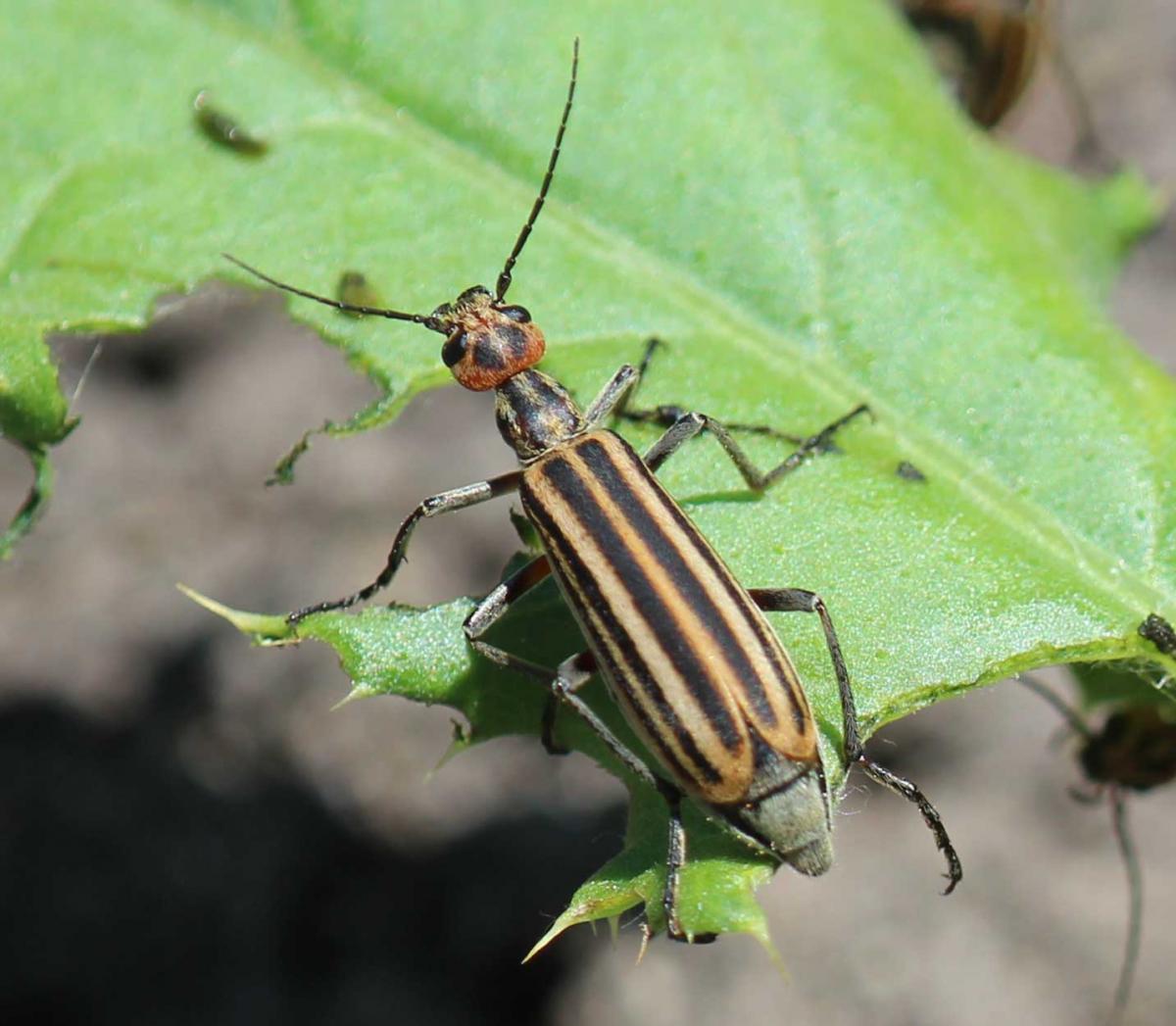
Know the Beetle Before You Treat
Why Overland Park Homes Get Beetles
Overland Park sits where Midwest grasslands meet wooded river valleys, and that mix — combined with hot, humid summers and cold winters — supports a wide range of beetles through the whole year. A few local factors drive most infestations:
None of this reflects on how clean your home is — beetles are drawn by materials and conditions, not tidiness. A spotless home with a wool closet or a damp hardwood subfloor is just as attractive as any other.
Signs of a Beetle Problem
Catching beetles early matters most with the wood- and fabric-destroying species, where waiting turns a small problem into real damage and repair costs.
Are Beetles Dangerous?
Most household beetles don't bite, sting, or transmit disease to people or pets. The risk they pose is to property: powderpost beetles can weaken hardwood and structural elements over time, carpet beetles can ruin clothing, rugs, and upholstery, and their larval hairs occasionally irritate sensitive skin. Japanese and box elder beetles are harmless to your home but damage gardens or overwhelm you with numbers. The point of professional control is matching the treatment to the actual threat — protecting wood and textiles where it counts, and simply keeping the nuisance species out.
How Beetles Get Into Your Home
Beetles arrive two ways, and knowing which matters for control:
That split is why beetle control combines two strategies: sealing and exclusion to stop the outdoor invaders, and inspection and targeted treatment of the materials and harborage areas where the indoor breeders live.
How Much Does Beetle Removal Cost in Overland Park, KS?
Beetle pricing depends heavily on the species and the extent of the problem, since a perimeter treatment for fall invaders is far simpler than treating a powderpost beetle infestation in flooring. In the Overland Park and Johnson County market, expect these general ranges:
Estimates for a typical 1,600–2,000 sq ft home; larger homes generally add 10–15%. Wood-boring beetle treatment varies widely with the affected area, severity, and whether localized treatment or whole-structure fumigation is required.
What moves the price:
Because beetle costs swing so widely by type, the only way to get an accurate number is an inspection. Frontier Trapper provides a no-obligation estimate for Overland Park homes and identifies the exact species before recommending any treatment.
Our Beetle Control Process
Beetles reward precision, so our process is built around correctly identifying the species first and then treating the actual source.
1. Inspection & Identification
We confirm exactly which beetle you're dealing with and trace it to its source — the closet or rug feeding carpet beetles, the section of flooring or framing hosting powderpost beetles, the garden or sunny wall drawing in summer and fall invaders. Everything else depends on getting this right.
2. Source Treatment
We treat where the beetles actually live and breed rather than just the strays you spot. That means targeted treatment of infested fabrics and harborage areas for carpet beetles, treatment of affected wood for powderpost beetles, and addressing outdoor breeding pressure for garden species — using methods chosen to fit the species and to stay safe for your family and pets when applied correctly.
3. Exclusion & Prevention
We seal the entry points the flying and wandering beetles use — door sweeps, window and screen gaps, weep holes, vents, and foundation cracks — to cut off the fall and summer invaders. For fabric and wood beetles, we lay out the storage, humidity, and material steps that keep them from re-establishing.
4. Monitoring & Follow-Up
Beetle life cycles play out over weeks, and some species can re-infest, so we verify the treatment worked and watch for new activity. For recurring seasonal pressure, a quarterly plan keeps protection in place ahead of each emergence.
What You Can Do Yourself
A few homeowner habits make professional treatment far more effective and help prevent the next infestation:
A Year-Round Beetle Calendar for Overland Park
Why Choose Frontier Trapper for Beetle Control?
Frontier Trapper is a locally owned, woman-owned, licensed and insured company that knows Overland Park homes and the beetles that come with Johnson County's gardens, tree cover, and seasonal swings. We identify the exact species before we treat, we match the method to the threat rather than blanket-spraying, and we use treatments that are safe for your family and pets when applied correctly. The same exclusion work that keeps fall beetles out also tightens your home against other pests, so you get protection that lasts beyond beetle season — and we'll tell you honestly when a storage change or a door sweep will do more than a treatment.
Get Rid of Beetles in Overland Park Today
Whether beetles are damaging your floors, your wardrobe, or your garden — or just swarming your windows every fall — Frontier Trapper will identify the exact species, treat the source, and seal them out for good. Call (816) 914-8660 or request your inspection today.
Frequently Asked Questions
Find answers to common questions about our wildlife trapping and removal services
Get a Fast Estimate to Reclaim Your Home Today!
Identify the beetle, treat the source, and seal them out. Request your inspection today.
Call Now 816-914-8660