
Fox Removal & Control in Overland Park, KS

Fox Removal & Control in Overland Park, KS

A Den Under the Deck and Missing Pets? You Likely Have a Fox

If you are finding a burrow dug under your deck, shed, or porch, hearing eerie screams at night, or noticing chickens and small pets going missing, there is a good chance a fox has settled onto your property. Red foxes have adapted beautifully to suburban Overland Park, and a quiet corner of your yard with cover and an easy food supply is exactly what a denning vixen looks for, especially in spring when she is raising a litter of kits.

A fox is wildlife, not a pest you can spray away, and because foxes can carry rabies and other diseases and are protected as furbearers under Kansas regulations, this is not a do-it-yourself job. Lasting relief comes from humane, licensed trapping or den eviction, followed by sealing off the den site and removing what drew the fox in. Frontier Trapper handles fox conflicts the right way: we remove the animals in compliance with Kansas wildlife regulations, evict denning families humanely, and exclude the site so a new fox does not simply move back in. Below is how to recognize fox activity, why Overland Park properties attract them, what removal costs locally, and how we resolve it for good.

What a Fox Looks Like (and How to Tell It From a Coyote or Dog)

Two foxes turn up around Overland Park: the red fox, which is by far the most common in yards and neighborhoods, and the less-often-seen gray fox. Knowing what you are looking at matters, because foxes are frequently mistaken for small coyotes or stray dogs, and the response differs:

Small and lightweight. A red fox looks dog-sized but weighs only about 8 to 15 pounds; much of its apparent size is fur. It is far smaller than a coyote, which runs 25 to 45 pounds.
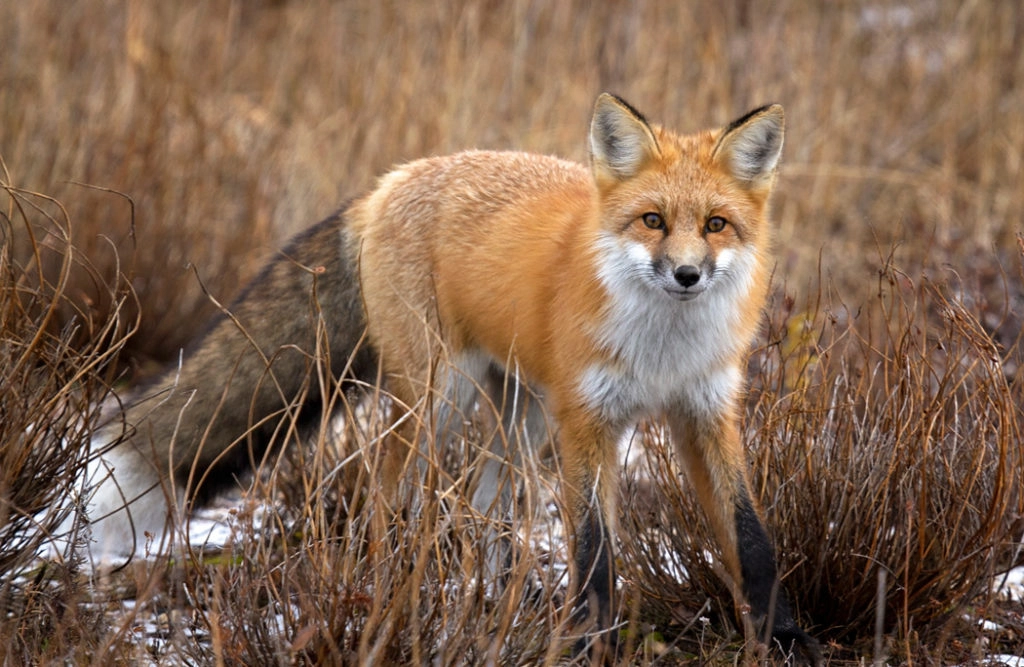
Rusty-red coat with black legs. Red foxes are reddish-orange with black "stockings," black-backed ears, and a distinctive white tip on the tail. Gray foxes are grizzled gray with a black-tipped tail and rusty patches.
A long, bushy tail. The full, fluffy tail carried low and straight is a fox signature and helps separate it from a coyote, whose tail is bushier at the base and often carried down.
A narrow muzzle and slender legs. Foxes have a delicate, pointed face and thin legs, giving them a lighter, more cat-like movement than a coyote or dog.
Mostly nocturnal and secretive. Foxes hunt from dusk through the night and are most often heard, or seen slipping across a yard at dawn, rather than confronted.
Red fox with a bushy white-tipped tail in an Overland Park, KS backyard

Know What You Are Dealing With

A red fox's rusty coat, black legs, and long white-tipped tail set it apart from a coyote or stray dog. Identifying the animal correctly, and spotting a den early, is what keeps a single denning season from turning into a recurring problem under your deck.

Why Overland Park Properties Get Foxes

Red foxes thrive at the edges where suburb meets open space, and Overland Park and the wider Johnson County area offer that mix everywhere:

Cover for dens. Decks, sheds, porches, crawl spaces, wood piles, and dense shrubs give a vixen the sheltered, defensible spot she needs to raise kits.
Easy food. Pet food left outdoors, unsecured garbage, fallen birdseed, chickens and rabbits, and the rodents those food sources attract all draw foxes in.
Green space and travel corridors. Creeks, greenbelts, golf courses, parks, and drainage corridors let foxes move through neighborhoods and connect denning and hunting areas.
Few natural predators. In town, foxes face little pressure and lose their wariness of people, so they settle in yards they would normally avoid.

Signs of a Fox Problem

A den burrow, typically 8 to 12 inches across, dug under a deck, shed, porch, or into a bank, often with scattered dirt and prey remains at the entrance.
Screaming and barking at night, a sharp, unsettling call foxes use during breeding and denning season.
A strong, skunky musk odor around the den site, distinct from but sometimes confused with skunk smell.
Missing or killed poultry, rabbits, and occasionally small pets, along with scattered feathers or kill remains.
Scat left on prominent spots like rocks or stumps, often full of fur, bones, seeds, and insect parts.
Sightings at dawn and dusk of a small, rusty, bushy-tailed animal crossing the yard or watching from cover.

A fox passing through the yard is normal and usually harmless, but an active den, repeated poultry losses, or a fox that has lost its fear of people signals an established problem that is best addressed before the next litter arrives.

Are Foxes Dangerous?

Foxes are naturally shy and almost always flee rather than confront a person, and unprovoked attacks on people are very rare. They are not harmless, though. Foxes can carry rabies, canine distemper, and mange, along with fleas, ticks, and roundworms that pose a risk to pets, and a fox that appears tame, disoriented, active in broad daylight, or unusually aggressive should be treated as a potential rabies concern and reported. The more common problems are predation on chickens, rabbits, and small pets, and the mess and disease risk of a den full of kits and prey remains against your home. The safest course is to keep your distance, keep pets away, and let licensed professionals handle removal.

How Foxes Damage Your Property

Fox conflicts on a residential property tend to fall into a few predictable categories:

Denning damage. Burrows dug under decks, sheds, porches, and slabs undermine footings and leave large holes, and the den fills with prey remains, scat, and parasites.
Loss of poultry and pets. Foxes are efficient predators of backyard chickens, ducks, rabbits, and occasionally cats and very small dogs.
Odor and contamination. The musky den smell, urine, and accumulated kill remains create a lingering odor and a sanitation problem right against the house.
Digging and disturbance. Foxes dig for grubs and rodents and cache food in lawns and beds, leaving holes and disturbed landscaping.
Parasite and disease exposure. Fleas, ticks, mange mites, and roundworm left around a den site can spread to pets and, less commonly, people.

Because a denning fox keeps returning nightly and the litter grows quickly, an active den is best addressed promptly, before the damage, odor, and predation compound through the season.

How Much Does Fox Removal Cost in Overland Park, KS?

Fox removal is specialty wildlife work, and cost depends on whether it is a single animal, a denning family with kits, and how much exclusion and cleanup the site needs. In the Overland Park and Johnson County market, expect these general ranges:

Initial inspection / site assessment: $100 – $200
Single-fox trapping and removal: $250 – $500
Den eviction / family with kits: $400 – $1,200+
Exclusion & den-site sealing (decks, sheds, slabs): $300 – $1,500+
Cleanup, odor treatment & repair: Quoted by scope

These are general estimates for typical residential properties in our area. Fox jobs vary with the number of animals, whether a litter is present, den location and access, and how much sealing and cleanup are required.

What moves the price:

Single animal vs. a denning family. A lone fox is a straightforward trapping job; a vixen with kits requires careful, humane eviction and more visits.
Den location and access. A burrow deep under a low deck or slab is harder to reach and exclude than an open bank den.
Exclusion work. Trenched, dig-proof barriers around decks, sheds, and porches cost more up front but are what actually keep foxes from re-denning.
Cleanup and repair. Removing prey remains and contaminated soil, treating odor, and repairing dug-out footings are quoted based on scope.

Because every fox situation is different, an on-site assessment is the only way to price the work accurately. Frontier Trapper inspects the den and the property, confirms whether kits are present, and provides an estimate based on what your situation actually needs.

Our Fox Removal Process

Foxes need a complete approach, removing the animals humanely, sealing off the den, and taking away what drew them in, so the problem does not simply repeat with the next season.

1. Thorough Inspection

We inspect the den site, entry points, and the surrounding property to confirm fox activity, determine whether a vixen and kits are present, identify what is feeding and sheltering them, and map the exclusion the site needs. This determines the safest and most humane removal strategy.

2. Safe & Humane Trapping and Removal

Using trapping and eviction methods suited to foxes and compliant with Kansas wildlife regulations, we remove the animals as humanely as possible. When a litter of kits is present, we prioritize keeping the family together and evicting them intact wherever we can, and all handling is done by licensed technicians rather than untrained hands.

3. Exclusion & Den-Site Sealing

Removal alone leaves an open, proven den site. We seal off the space under decks, sheds, porches, and slabs with dig-proof, trenched barriers and heavy exclusion material so foxes and other animals cannot re-establish a burrow there.

4. Cleanup, Odor Treatment & Prevention

Finally, we clean up prey remains, scat, and contaminated material, treat lingering odor, and advise on prevention, securing pet food and garbage, protecting poultry with proper fencing, and clearing cover, so your property is far less inviting to the next fox that comes through.

What You Can Do Yourself

A few homeowner steps support professional removal and help keep foxes from returning, though the trapping and den work itself should be left to licensed pros:

Remove the food. Feed pets indoors, secure garbage in tight-lidded cans, clean up fallen birdseed, and never leave food out overnight.
Protect poultry and rabbits. House chickens and rabbits in a secure, predator-proof enclosure with a buried wire apron, and lock them in at night.
Cut off den access. Once a den is confirmed empty, close gaps under decks, sheds, and porches with dig-proof barriers, best done by a professional.
Reduce cover. Trim dense shrubs, clear brush and wood piles, and keep grass mowed to make the yard less attractive for denning.
Never approach or feed a fox. Do not corner, handle, or feed foxes; keep pets leashed and away, and report any fox that seems sick, tame, or aggressive.
Act early. Address a new den before the kits grow and the family becomes entrenched.

A Year-Round Fox Calendar for Overland Park

Winter: Breeding season peaks in January and February, and the nighttime screaming is loudest as foxes pair up and search for den sites.
Spring: Kits are born and raised in the den, the busiest and most conflict-heavy season, with the most visible activity, prey remains, and predation on poultry.
Summer: Kits grow and begin learning to hunt with the parents; the family is still active around the den before the young start to disperse.
Fall: Young foxes disperse to establish their own territories, so new animals may show up as they search for food and denning sites of their own.

Why Choose Frontier Trapper for Fox Removal?

Frontier Trapper is a locally owned, woman-owned, licensed and insured company that knows Overland Park neighborhoods and the wildlife that comes with Johnson County's mix of yards and green space. Fox work calls for judgment and care, especially when kits are involved, and we handle it humanely and in full compliance with Kansas wildlife regulations. Because we pair removal with den-site exclusion and cleanup rather than just trapping an animal, results last, and we focus on making your property genuinely less attractive so a new fox does not take over where the last one denned.

Get Rid of Foxes in Overland Park Today

Protect your pets, your poultry, and your home before a den full of kits turns into a season of damage and predation. Frontier Trapper will inspect your property, remove the foxes humanely and legally, seal the den site, and clean up so it stays resolved. Call (816) 914-8660 or request your inspection today.

Frequently Asked Questions

Find answers to common questions about our wildlife trapping and removal services

Foxes are shy and almost always flee from people, and unprovoked attacks are very rare. The real risks are predation on chickens, rabbits, and small pets, and disease: foxes can carry rabies, distemper, mange, and parasites. A fox that seems tame, disoriented, or active and bold in daylight should be treated as a possible rabies concern and reported.
Keep pets and people away and avoid disturbing it, especially in spring when kits may be inside. Don't try to dig it out or trap the fox yourself. A licensed technician can confirm whether kits are present, evict the family humanely, and then seal the den site so it cannot be reused.
Yes, but it is regulated. Foxes are managed as furbearing wildlife in Kansas, with rules covering how and when they can be trapped. Frontier Trapper handles all removal humanely and in full compliance with Kansas wildlife regulations, which is why this work should be left to licensed professionals.
It can happen, though foxes more often target poultry, rabbits, and very small pets than cats or dogs. Cats and small dogs are safest supervised or leashed, especially at dawn, dusk, and overnight, and poultry should be housed in a secure, predator-proof enclosure.
Foxes make a sharp, unsettling scream and bark, most often during the winter breeding season and while denning. It can sound alarming but is normal fox communication rather than a sign of an animal in distress.
Remove the food and shelter that drew them in: feed pets indoors, secure garbage, protect poultry, clear brush and wood piles, and seal off den access under decks and sheds with dig-proof barriers. Combining that exclusion with professional removal is what keeps a new fox from moving in.

Request a Fast Estimate to Reclaim Your Property Today!

Protect your pets, poultry, and home from foxes. Request your fox inspection today.

Call Now 816-914-8660