

Flipped On the Kitchen Light and Watched a Roach Scatter? Here's What It Means
Few things make your stomach drop like turning on the kitchen light at night and seeing a cockroach dart under the stove. Cockroaches are nocturnal and secretive, so by the time you spot one in the open, there are almost always many more you can't see. Unlike the occasional invaders that wander in from outside, some roaches — especially German cockroaches — set up shop and breed indoors, and their numbers can double fast when there's food, water, and warmth to sustain them. Seeing a roach isn't just unpleasant; it's a signal about what's happening inside your walls.
That's also why cockroaches are the pest people most often fail to beat with a can of spray. Real control depends on knowing which species you have, cutting off the food and moisture feeding them, placing bait where the roaches actually live, and sealing the paths they travel. Frontier Trapper takes that source-first approach in Overland Park and across Johnson County. Below is how to identify your roach, why they're in your home, the health risks that make them worth taking seriously, what treatment costs locally, and how we get rid of them for good.
What Kind of Cockroach Do You Have?
Species identification is the most important step in cockroach control, because different roaches mean completely different problems and solutions. A large roach that wanders up from a drain is a very different situation than a small one breeding behind your dishwasher. Here are the four species Overland Park homes and businesses see most.
German Cockroaches
The German cockroach is the one you never want to find, and unfortunately it's the most common indoor roach. They're small — about half an inch — light brown or tan, with two dark stripes behind the head. German roaches live and breed entirely indoors, concentrating in warm, moist spots like kitchens and bathrooms: behind and under appliances, inside cabinets, around sinks, and in the seams of countertops. A single female and her offspring can produce hundreds of roaches in a few months. If you're seeing small roaches indoors, you almost certainly have an established breeding population that requires professional gel baiting, not just surface spraying.
American Cockroaches
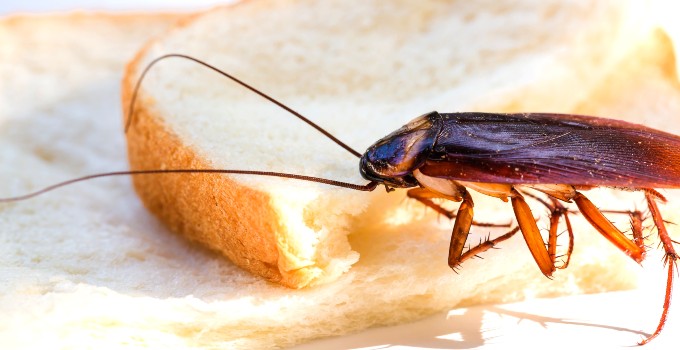
American cockroaches are the big ones — reddish-brown and often an inch and a half or longer, the roaches many people call 'water bugs' or 'palmetto bugs.' They prefer warm, damp areas and are commonly found in basements, crawl spaces, floor drains, sewers, and around water heaters. Unlike German roaches, they typically don't breed throughout your living space; they tend to wander in from drains, sewer lines, and the outdoors, especially in warm weather. Seeing them usually points to a moisture or drain issue and an entry point rather than a widespread indoor infestation.
Oriental Cockroaches
Oriental cockroaches are dark brown to shiny black, roughly an inch long, and move more slowly than other species. Sometimes called 'water bugs' too, they love cool, damp environments — basements, crawl spaces, drains, and the space around foundations and mulch beds. They give off a noticeably musty odor and are strongly tied to moisture. Like American roaches, they're generally an occasional invader that comes in from damp exterior areas and low, wet spots, so controlling them leans heavily on moisture correction and exclusion.
Brown-Banded Cockroaches
Brown-banded cockroaches are small like German roaches but prefer warmer, drier locations and spread out more widely through a home. Instead of clustering near water, they hide higher up — behind picture frames, inside electronics and appliances, in closets, and near ceilings. They get their name from the light bands across their wings. Because they scatter throughout the structure rather than staying near the kitchen and bath, they can be trickier to track down, which is another reason a thorough inspection matters.
Which Roach You Have Changes Everything
Why Overland Park Homes Get Cockroaches
Cockroaches are opportunists that follow food, water, and warmth, and Overland Park homes offer all three across the year. A few conditions consistently invite them in:
Signs of a Cockroach Problem
Spotting even one of these signs — particularly droppings, egg cases, or roaches during the day — usually means the problem is bigger than a stray bug. Daytime activity in particular often signals a population large enough that roaches are being pushed out of their hiding places, and that's the point to bring in professional treatment.
Are Cockroaches Dangerous?
Yes — and this is where cockroaches differ from many nuisance pests. Roaches are a genuine health and sanitation concern. Their droppings, shed skins, and saliva contain allergens that can trigger allergic reactions and asthma attacks, and children are especially vulnerable; heavy indoor roach exposure is a recognized contributor to childhood asthma. Because roaches travel through drains, sewers, garbage, and decaying matter and then across counters and food-prep surfaces, they can spread bacteria and contaminate food, contributing to food poisoning and stomach illness. Cockroaches don't typically bite, but the allergens and contamination they leave behind make them a real risk to your family's health, not just an unpleasant sight. That's why prompt, thorough control matters more with roaches than with most other pests.
How Cockroaches Get Into Your Home
Different species arrive by different routes, but they all exploit the same kinds of openings and opportunities:
How Much Does Cockroach Treatment Cost in Overland Park, KS?
Cockroach pricing depends heavily on the species and severity — a few large roaches wandering up from a drain is a much smaller job than an established German roach infestation that needs a multi-visit baiting program. In the Overland Park and Johnson County market, expect costs in these general ranges:
Estimates for a typical 1,600–2,000 sq ft home; larger homes and heavier infestations generally add cost. Pricing varies with the species, how established the population is, and how much sanitation and moisture work the situation requires.
What moves the price:
Because cockroach control hinges on correct species identification and on the conditions sustaining them, an on-site inspection is the only way to price it accurately. Frontier Trapper inspects your home, identifies the roach and the sources feeding it, and provides an estimate based on what your situation actually requires.
Our Cockroach Control Process
Cockroaches survive when treatment only hits the surface, so we go after the harborage, the food and water, and the entry points — not just the roaches you can see. Spraying baseboards alone can even scatter German roaches deeper into a home; our process is built to actually break the cycle.
1. Inspection & Identification
We inspect kitchens, bathrooms, basements, drains, and appliance voids to identify the species and find where roaches are living and breeding. Knowing whether you have German roaches breeding indoors or American and Oriental roaches coming from moisture and drains determines the entire treatment plan.
2. Targeted Baiting & Treatment
For indoor breeding species like German and brown-banded roaches, we rely on professional gel baits placed precisely in the cracks, voids, and harborage where roaches actually feed and hide. Bait works because roaches carry it back and share it, reaching the ones you never see — something surface spraying can't do. For drain-driven American and Oriental roaches, we treat entry points, drains, and harborage directly. Every method we use is safe for your family and pets when applied correctly.
3. Sanitation & Moisture Correction
Baiting fails if roaches have an unlimited food and water supply competing with it, so this step is essential. We identify the sanitation and moisture conditions feeding the infestation — grease behind appliances, crumbs and clutter, leaks, condensation, and damp harborage — and lay out the practical corrections that make treatment stick. Reducing food and water is what turns a knockdown into lasting control.
4. Exclusion & Follow-Up
Finally, we seal the gaps and drains roaches use — cracks, utility penetrations, and openings around plumbing — to keep new ones out, and we schedule follow-up visits. Follow-up is critical with roaches, especially German roaches, because eggs hatch after the first treatment; returning visits catch that next generation and confirm the population is truly gone.
What You Can Do Yourself
A few homeowner habits make professional treatment far more effective and discourage roaches from settling in:
A Year-Round Cockroach Calendar for Overland Park
Why Choose Frontier Trapper for Cockroach Control?
Frontier Trapper is a locally owned, woman-owned, licensed and insured company that understands Overland Park homes and the roach pressure that comes with Johnson County's humid summers and older plumbing. We treat cockroaches as the health and sanitation concern they are, starting with correct species identification and going after the food, water, and harborage sustaining them rather than just spraying the roaches you see. We lead with inspection, rely on professional gel baiting where it belongs, correct the sanitation and moisture conditions feeding the problem, seal entry points, and follow up to catch the next generation. Because our approach targets the source, results last — and the same thorough work protects your family from the allergens and contamination roaches leave behind.
Get Rid of Cockroaches in Overland Park Today
Stop watching roaches scatter across your kitchen floor and fix what's keeping them there. Frontier Trapper will inspect your home, identify the species, pinpoint the food and moisture conditions feeding the infestation, and build a control plan to keep cockroaches out for good. Call (816) 914-8660 or request your inspection today.
Frequently Asked Questions
Find answers to common questions about our wildlife trapping and removal services
Get a Fast Estimate to Reclaim Your Home Today!
Stop the roaches at the source with expert baiting and exclusion. Request your inspection today.
Call Now 816-914-8660