Bird Removal & Control in Overland Park, KS

Bird Removal & Control in Overland Park, KS

Birds Nesting in Vents, Eaves, or Rafters? Here's What to Do

When pigeons line up along your roofline, starlings pack a nest into a dryer or bathroom vent, or sparrows build in the eaves and signage of your building, you are dealing with pest birds, and the droppings, noise, blocked vents, and nesting mess add up fast. Around Overland Park, a handful of adaptable birds have learned that our homes and commercial buildings offer perfect ledges, cavities, and shelter, and once they establish a roost or nesting site, they return to it year after year unless they are excluded.

Bird control is different from other wildlife work in one crucial way: most native birds in Kansas are federally protected under the Migratory Bird Treaty Act, and it is illegal to harm them or disturb an active nest with eggs or young. Only a few introduced species, primarily pigeons, European starlings, and house sparrows, are not protected and can be actively controlled. That is exactly why this work belongs with professionals who know the law. Frontier Trapper handles pest birds the right way: we identify the species, resolve the problem legally and humanely, and, most importantly, exclude the site with physical barriers so the birds cannot come back. Below is how to recognize a bird problem, why Overland Park buildings attract them, what control costs locally, and how we resolve it for good.

Which Birds Are a Problem (and Which Are Protected)

Correct identification is the first and most important step, because it determines what is legally possible. The pest birds we can actively control are the introduced, non-protected species:

Pigeons (rock doves). Plump gray birds that roost and nest on ledges, rooftops, signs, and under bridges and solar panels, producing heavy droppings; not federally protected.
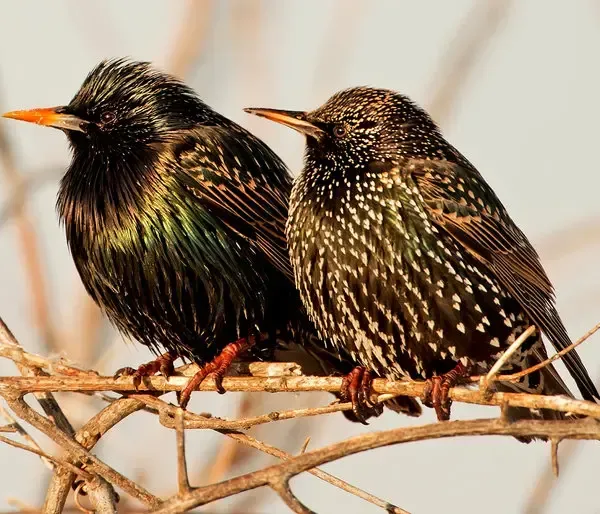
European starlings. Dark, glossy, stocky birds that aggressively pack nests into vents, soffits, and cavities and gather in large, noisy flocks; not federally protected.
House sparrows. Small brown-and-gray birds that stuff nests into eaves, signage, vents, and any small cavity around buildings; not federally protected.
Protected native birds. Most other birds, including robins, swallows, woodpeckers, and songbirds, are protected under the Migratory Bird Treaty Act; their active nests cannot legally be disturbed, so the solution is legal deterrence and timing, not removal.
The takeaway. Identifying the species correctly is what separates a legal, effective control plan from a violation, which is why professional identification comes first.
Pest birds roosting on a building ledge in Overland Park, KS

Identify Before You Act

Pigeons, starlings, and house sparrows are the non-protected pest birds that can be actively controlled, while most native birds are federally protected. Getting the species right, and excluding roost and nest sites, is what makes bird control both legal and lasting.

Why Overland Park Buildings Get Pest Birds

Pest birds thrive wherever buildings offer ledges, cavities, and food, and Overland Park's mix of homes, retail, and commercial sites across Johnson County provides all of it:

Ledges and roosting spots. Rooflines, parapets, signage, ledges, beams, and the space under solar panels give pigeons and starlings ideal perching and roosting.
Cavities and vents. Dryer, bathroom, and stove vents, open soffits, gable vents, and gaps in eaves are exactly the sheltered cavities starlings and sparrows nest in.
Reliable food. Dumpsters, outdoor dining, spilled grain, fallen birdseed, and parking-lot litter feed large urban bird populations.
Warmth and shelter. Warehouses, garages, barns, canopies, and covered entries provide protected roosting out of the weather year-round.
Established sites. Once a roost or nest site is used successfully, the birds and their offspring return to it repeatedly until it is physically blocked.

Signs of a Bird Problem

Droppings accumulating on ledges, walkways, signage, vehicles, and building faces, a health and slip hazard as well as unsightly.
Nesting material packed into vents, soffits, eaves, gutters, and signage, sometimes blocking airflow or drainage.
Constant cooing, chirping, or flocking noise, and birds lined up on rooflines, wires, and ledges.
Blocked dryer or exhaust vents, which is both a fire and ventilation hazard when starlings or sparrows nest inside.
Feathers, nesting debris, and clogged gutters, along with staining down walls beneath roosts.
Mites, beetles, and odor associated with active nests and heavy droppings.

A bird visiting a feeder is no problem, but pigeons, starlings, or sparrows roosting and nesting on or in a structure create a recurring mess and health hazard that only grows until the site is excluded.

Are Pest Birds Dangerous?

Pest birds are not a physical threat to people, but they carry real health and safety concerns. Bird droppings can harbor pathogens, and accumulated pigeon and starling droppings are associated with diseases such as histoplasmosis and cryptococcosis, which can affect people who disturb dried droppings during cleanup. Nests and droppings also host parasites like bird mites and beetles that can move indoors. Beyond disease, droppings are corrosive and create slip hazards on walkways, nests in vents are a fire and ventilation risk, and blocked gutters cause water damage. Because safe cleanup of droppings and nests requires proper protective equipment and methods, and because the birds must be handled within the law, this work is best left to professionals.

How Pest Birds Damage Your Property

Bird problems on a home or commercial building in Overland Park typically show up as:

Droppings damage. Acidic droppings corrode paint, metal, stone, and vehicles, and create constant cleanup and liability on walkways and entries.
Blocked vents and fire risk. Nests packed into dryer and exhaust vents block airflow and become a genuine fire hazard.
Clogged gutters and water damage. Nesting debris blocks gutters and drains, backing up water against the structure.
Health and parasite exposure. Pathogens in droppings and mites and beetles from nests pose risks to occupants, especially during disturbance or cleanup.
Reputation and compliance. For businesses, droppings, noise, and nests at entrances and dining areas are a customer-facing and sanitation-compliance problem.

Because established birds return to the same sites and populations grow, the mess, damage, and health risk compound until the roosting and nesting spots are physically excluded.

How Much Does Bird Removal Cost in Overland Park, KS?

Bird control is priced by the site rather than by the animal, because the real work is exclusion and cleanup, which scale with the building. In the Overland Park and Johnson County market, expect these general ranges:

Initial inspection / site assessment: $100 – $250
Nest removal & vent clearing: $150 – $500+
Exclusion (netting, spikes, vent covers, screening): $300 – $3,000+
Droppings cleanup & sanitizing: Quoted by scope
Commercial / large-structure projects: Quoted by scope

These are general estimates. Bird jobs vary enormously with the species, the size and height of the structure, the type and amount of exclusion required, and how much droppings cleanup and sanitizing the site needs. Commercial and multi-story buildings are quoted individually.

What moves the price:

Extent and height of the exclusion. Netting a warehouse, spiking a long roofline, or screening many vents involves far more material and access than a single vent cover.
Species and legal status. Protected native birds require legal, timing-based solutions that differ from active control of pigeons, starlings, and sparrows.
Cleanup and sanitizing. Heavy droppings accumulation requires protective equipment, removal, and sanitizing, quoted by scope.
Access and structure type. Height, roof complexity, and commercial versus residential all affect the equipment and labor involved.

Because every building is different, an on-site assessment is the only way to price bird control accurately. Frontier Trapper inspects the structure, identifies the species, and provides an estimate based on the exclusion and cleanup your site actually needs.

Our Bird Control Process

Bird control is won with exclusion, not just removal, because any roost or nest site left open will simply be reoccupied. Our process is built to resolve the problem and keep the birds out for good, legally.

1. Inspection & Species Identification

We inspect the structure to identify the species and confirm its legal status, locate roosting and nesting sites, assess the droppings and any blocked vents, and map the exclusion the building needs. Species identification drives the entire plan, since protected birds require a different, legal approach.

2. Legal, Humane Removal & Nest Clearing

For non-protected pest birds, we resolve the active problem and clear nests from vents, soffits, and cavities. For protected native species, we work within the Migratory Bird Treaty Act, timing and deterrence rather than harm, so the site is handled legally. All work is carried out in compliance with federal and Kansas regulations.

3. Exclusion & Deterrents

This is the heart of lasting bird control. We install physical exclusion matched to the site, netting, ledge spikes, vent and soffit covers, screening, and other deterrents, so birds can no longer roost or nest on the structure. Proper exclusion is what turns a temporary cleanup into a permanent solution.

4. Cleanup, Sanitizing & Prevention

Finally, we safely remove droppings and nesting debris, sanitize affected areas using proper protective methods, and advise on prevention, removing food sources, closing remaining gaps, and maintaining the exclusion, so the birds do not return and the health hazard is resolved.

What You Can Do Yourself

A few steps support professional bird control and help keep pest birds from settling in, though exclusion and droppings cleanup are best handled by professionals:

Remove the food. Secure dumpsters and trash, clean up spilled grain and outdoor-dining scraps, and reconsider or relocate bird feeders that draw pest birds.
Screen and cap vents. Fit dryer, bathroom, and stove vents with proper covers and screen gable and soffit openings, ideally before nesting season.
Close gaps early. Seal small openings in eaves, soffits, and signage that sparrows and starlings exploit as nesting cavities.
Do not disturb protected nests. Never remove an active nest with eggs or young until the species is identified, protected birds are covered by federal law.
Act before nesting season. Address roosting and access in late winter, before spring nesting makes the problem legally and practically harder.
Use protection for droppings. Avoid dry-sweeping heavy droppings, which aerosolizes pathogens; professional cleanup is the safer route.

A Year-Round Bird Calendar for Overland Park

Winter: Pigeons, starlings, and sparrows roost in flocks on warm structures; late winter is the ideal time to exclude sites before nesting begins.
Spring: Peak nesting season, birds pack vents, eaves, and ledges with nests; protected native nests become legally off-limits once eggs are laid.
Summer: Multiple broods are raised, populations climb, and droppings and noise around active sites are at their heaviest.
Fall: Flocks regroup and search for winter roosts, so new birds may move onto a structure, making it a good time to shore up exclusion.

Why Choose Frontier Trapper for Bird Control?

Frontier Trapper is a locally owned, woman-owned, licensed and insured company that understands Overland Park homes and commercial buildings and the pest birds that come with Johnson County's rooftops, vents, and ledges. Bird work demands knowing the law as much as the birds, and we handle it correctly, identifying species, resolving problems within the Migratory Bird Treaty Act and Kansas regulations, and, above all, excluding the site so birds cannot return. Because we solve the problem with proper exclusion and safe cleanup rather than a quick, temporary fix, results last and the health hazard is genuinely resolved.

Get Rid of Pest Birds in Overland Park Today

Stop the droppings, blocked vents, and nesting mess before they damage your property and create a health hazard. Frontier Trapper will inspect your building, identify the species, resolve the problem legally, exclude the site, and clean up so the birds stay gone. Call (816) 914-8660 or request your inspection today.

Frequently Asked Questions

Find answers to common questions about our wildlife trapping and removal services

Only a few introduced, non-protected species, primarily pigeons, European starlings, and house sparrows, can be actively controlled. Most native birds are protected under the federal Migratory Bird Treaty Act, and it is illegal to harm them or disturb an active nest with eggs or young. That's why correct species identification comes first.
No, the lasting solution is exclusion. Trapping or removing birds without blocking their roost and nest sites just invites them back, since they return to proven locations. Physical exclusion, netting, spikes, vent covers, and screening, is what actually keeps pest birds off a structure for good.
Yes. Accumulated droppings from pigeons and starlings can harbor pathogens associated with diseases like histoplasmosis and cryptococcosis, especially when dried droppings are disturbed during cleanup, and nests host mites and beetles. Safe removal requires proper protective equipment and methods, which is why professional cleanup is recommended.
A nest packed into a vent blocks airflow and is a fire and ventilation hazard. If it belongs to a non-protected species like a starling or sparrow, we can clear it and install a proper vent cover to prevent reoccupation. If a protected species is involved, we handle it legally within federal timing rules.
Late winter, before spring nesting begins, is ideal. Excluding roost and access points before birds build active nests avoids both the legal complications of disturbing protected nests and the bigger mess of an established nesting site. That said, pigeons, starlings, and sparrows can be addressed year-round.
Remove food sources, screen and cap vents, close gaps in eaves and soffits, and, most importantly, maintain professional exclusion like netting and spikes on roosting sites. Combining attractant removal with proper physical exclusion is what keeps pest birds from re-establishing on a structure.

Request a Fast Estimate to Protect Your Property Today!

Stop the droppings, blocked vents, and nesting mess. Request your bird control inspection today.

Call Now 816-914-8660