

Found a Fast, Many-Legged Bug in Your Basement? Here's What It Means
That startling, fast-moving bug darting across your basement floor or bathroom tile is almost always a house centipede — and like the pill bugs and other crawlers people find indoors, it's really telling you something about moisture. Centipedes are predators that follow their prey. When they show up inside an Overland Park home, it usually means two things: there's enough dampness to keep them comfortable, and there are enough other insects around to feed them. Kill the centipedes you can see and more will follow, because the conditions that drew them are still there.
That's why lasting centipede control isn't about chasing individual bugs. It comes from reducing moisture, cutting off their food supply of other insects, and sealing the ground-level gaps they use to get in. Frontier Trapper takes that source-first approach. Below is how to tell a centipede from a millipede, why they're in your home, what removal costs in our area, and how we get rid of them for good.
Centipede vs. Millipede: How to Tell Them Apart
People lump these together constantly, but they're different animals with different habits — and telling them apart tells you what you're actually dealing with.
Centipedes
Centipedes have one pair of legs per body segment, a flattened body, and move fast. The common house centipede is grayish-yellow with long, dramatic legs and is built to hunt. Centipedes are predators that eat other insects, and they have venom they use to subdue prey. A house centipede can bite if handled, but bites are uncommon and usually no worse than a bee sting; they don't damage your home or food.
Millipedes
Millipedes have two pairs of legs per segment, a rounded, cylindrical body, and move slowly. They curl into a tight spiral when disturbed and can emit a faintly foul-smelling defensive fluid. Millipedes are harmless scavengers that feed on decaying plant matter, not hunters — they wander in by the dozens during wet weather, then dry out and die.
The shared thread is moisture: both are drawn indoors by damp conditions, and the prevention steps overlap. But centipedes signal an insect food supply worth addressing, while millipedes are usually a seasonal, weather-driven nuisance.
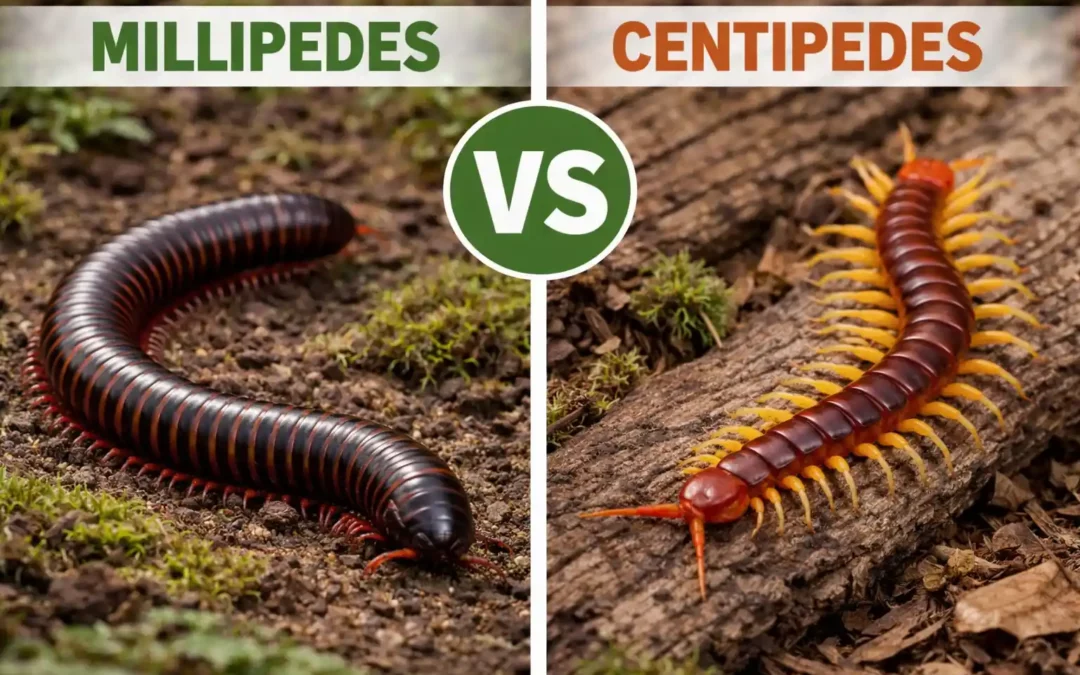
Two Different Animals, Two Different Signals
Why Overland Park Homes Get Centipedes
Centipedes thrive in exactly the conditions Overland Park and Johnson County serve up across the year:
As with most occasional invaders, this has nothing to do with how clean your home is. Centipedes are chasing moisture and prey, and a spotless home with a damp basement is just as inviting as any other.
Signs of a Centipede Problem
A single centipede now and then is normal in our climate. Regular sightings, especially several in a week, signal that moisture and a food source are sustaining them indoors.
Are Centipedes Dangerous?
For the most part, no. House centipedes are actually beneficial in a sense — they hunt and eat other household pests like spiders, silverfish, and cockroaches. They don't damage your home, contaminate food, or spread disease. A house centipede can deliver a mild, bee-sting-like bite if you try to handle one, but they're not aggressive and bites are uncommon. The larger concern they raise is indirect: a centipede population is a sign your home has both a moisture issue and an insect problem feeding them, and those underlying conditions are what professional control actually resolves.
How Centipedes Get Into Your Home
Centipedes are ground-level invaders that slip in through the same kinds of gaps other crawlers use:
Because every entry point is low and damp-adjacent, sealing those gaps and drying the areas behind them is far more effective than spraying the centipedes you happen to spot.
How Much Does Centipede Removal Cost in Overland Park, KS?
Centipedes are treated as an occasional invader, typically as part of a perimeter and interior pest program rather than a standalone specialty job. In the Overland Park and Johnson County market, expect costs in these general ranges:
Estimates for a typical 1,600–2,000 sq ft home; larger homes generally add 10–15%. Pricing varies with infestation severity, moisture conditions, and how much the underlying insect problem needs to be addressed.
What moves the price:
Because centipede control is really about moisture and prey control, an on-site inspection is the only way to price it accurately. Frontier Trapper inspects your home, identifies the conditions sustaining the centipedes, and provides an estimate based on what your situation actually requires.
Our Centipede Control Process
Centipedes are a symptom of moisture and of other insects, so we treat the cause, not just the bugs you see.
1. Thorough Inspection
We inspect the damp, ground-level areas that centipedes prefer — basements, crawl spaces, bathrooms, and the exterior of the foundation — to find where they're getting in, what's keeping those areas moist, and which other insects are feeding them. This tells us what's really sustaining the population.
2. Moisture & Habitat Correction
This is the step that makes centipede control last. We identify the conditions drawing them in and lay out practical fixes: reducing humidity in basements and crawl spaces, addressing drainage and condensation, pulling mulch and leaf litter back from the foundation, and clearing the damp harborage where centipedes live outside the wall.
3. Targeted Treatment
Where treatment is warranted, we treat the perimeter, entry points, and harborage areas, and we address the prey insects that give centipedes a reason to stay. Cutting off the food supply turns a quick knockdown into real control, using methods that are safe for your family and pets when applied correctly.
4. Exclusion & Prevention
Finally, we seal the ground-level gaps centipedes use — door sweeps, foundation cracks, expansion joints, and crawl space and basement openings — so the next wave can't get in. The same seal keeps out other moisture-driven pests that use these entry points.
What You Can Do Yourself
A few homeowner habits make professional treatment far more effective and discourage centipedes from settling in:
A Year-Round Centipede Calendar for Overland Park
Why Choose Frontier Trapper for Centipede Control?
Frontier Trapper is a locally owned, woman-owned, licensed and insured company that understands Overland Park homes and the damp basements and crawl spaces that come with Johnson County's wet springs and humid summers. We treat centipedes as the moisture-and-prey symptom they are, rather than just spraying the ones you see. We lead with inspection and exclusion, and we use treatments that are safe for your family and pets when applied correctly. Because our approach targets the conditions and the food supply, results last, and the same exclusion and moisture work that stops centipedes also protects against the other pests that share their habitat.
Get Rid of Centipedes in Overland Park Today
Stop chasing fast-moving centipedes across your basement floor and fix what's drawing them in. Frontier Trapper will inspect your home, pinpoint the moisture and insect conditions that are feeding the problem, and build a control plan to keep centipedes out for good. Call (816) 914-8660 or request your inspection today.
Frequently Asked Questions
Find answers to common questions about our wildlife trapping and removal services
Request a Fast Estimate to Reclaim Your Home Today!
Stop chasing centipedes and fix what draws them in. Request your inspection today.
Call Now 816-914-8660