

Found a Snake in the Yard, Garage, or Basement? Here's What to Do
Coming face to face with a snake coiled by the foundation, stretched across the garage floor, or slipping into a basement window well is unsettling, and the first instinct is usually to grab a shovel. The good news is that the vast majority of snakes in Overland Park and Johnson County are completely harmless, and many are quietly doing you a favor by eating the mice, voles, and insects around your home. Killing a snake is rarely necessary, it can be dangerous if the snake is one of the few venomous species, and it does nothing to stop the next one from wandering in. What matters is correctly identifying what you have and removing it safely.
That is why Frontier Trapper treats snakes as the wildlife they are, with a humane, identification-first approach. We come out, determine whether the snake is venomous or harmless, capture it safely, and relocate it away from your home. Just as important, we look at why a snake showed up in the first place, because snakes follow food and shelter. Below is how to tell a copperhead from its harmless look-alikes, why Overland Park properties attract snakes, what removal costs in our area, and how we get rid of them for good without harming the beneficial ones.
Venomous or Not? How to Tell What You Have
The single most important question with any snake is whether it is venomous, because that changes everything about how it should be handled. In and around Overland Park, the odds are strongly in your favor: nearly every snake people encounter here is non-venomous. The only venomous snake of real concern in Johnson County is the copperhead, and even that is not the everyday visitor most homeowners fear. Rattlesnakes are rare in this immediate area. Here is how to tell the harmless majority from the one species to respect.
Common Harmless Snakes
Most snakes you will meet in an Overland Park yard are gentle, beneficial, non-venomous species. Garter snakes are slender with long yellow or greenish stripes running down the body and are among the most common in the metro. Rat snakes (including black rat snakes) are the large climbers you might find near sheds or up a tree hunting rodents, and they are outstanding natural pest control. Ring-necked snakes are small, dark, and secretive, marked by a thin yellow or orange ring around the neck. DeKay's brown snakes (often just called brown snakes) are little gray-brown burrowers that live in mulch and garden beds and eat slugs and earthworms. All of these have rounded pupils, narrow heads roughly the same width as the neck, and no venom. They are far more interested in escaping than confronting you.
The One to Watch: Copperheads
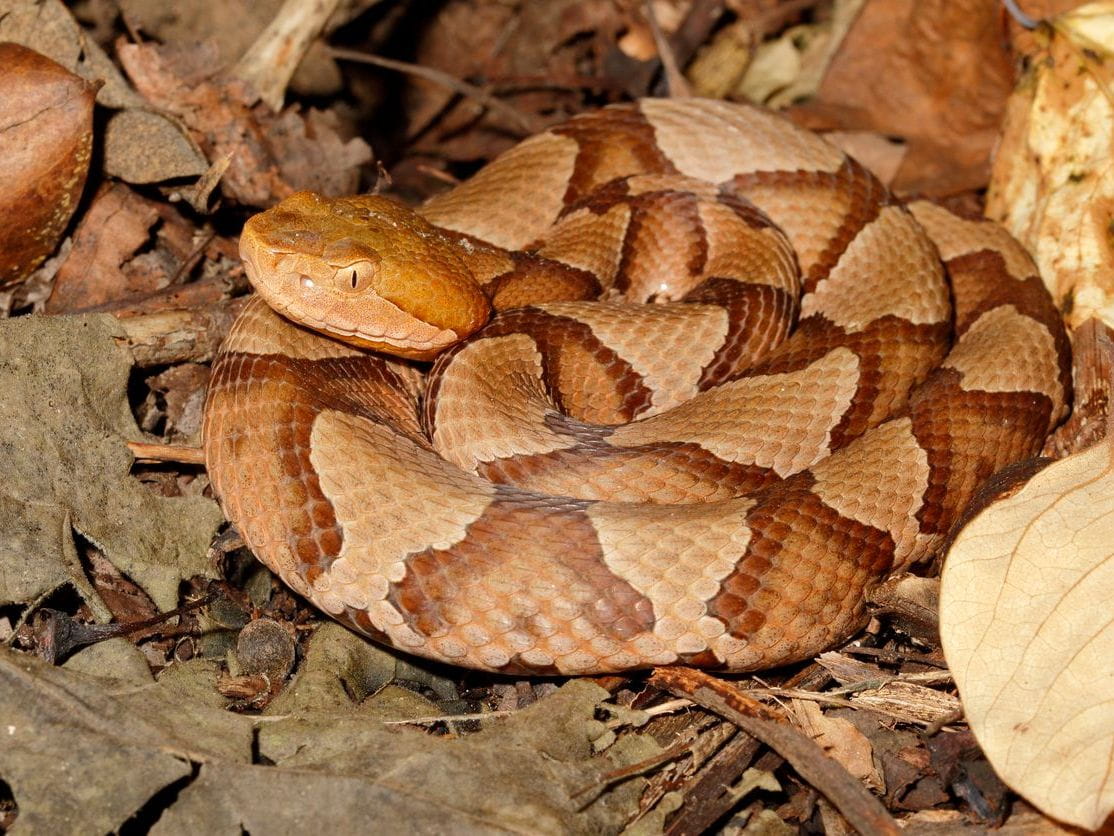
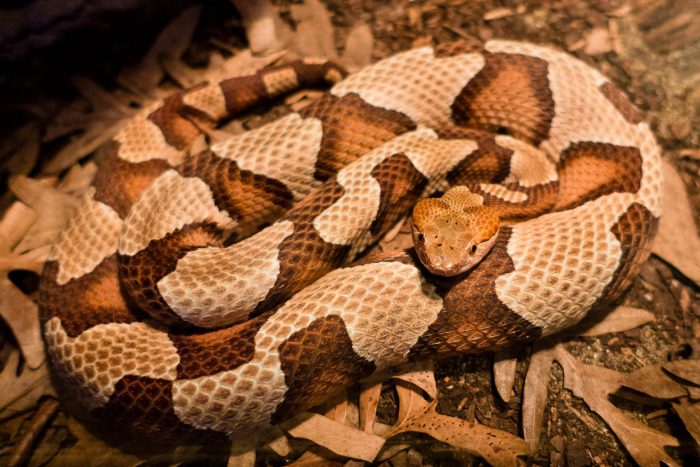
The copperhead is the venomous snake to know in this region. It has a distinctive pattern of chestnut or coppery hourglass-shaped bands that are wide on the sides and pinch narrow across the top of the back, a coppery-tan head, and a triangular, arrow-shaped head that is noticeably wider than the neck. Copperheads also have vertical, cat-like pupils and a heat-sensing pit between the eye and nostril. They are ambush hunters that favor leaf litter, wood piles, rock walls, and brushy edges, where their coloring is superb camouflage. Harmless look-alikes such as young rat snakes or water snakes can be blotchy, but they lack the clean hourglass banding, the triangular head, and the coppery tone. When in doubt, do not try to identify a snake up close, and never handle one. Keep your distance, keep pets and children back, and let a professional make the call.
Identifying What Is in Your Yard
Why Overland Park Homes Get Snakes
Snakes do not seek out people. They follow food and shelter, and Overland Park and Johnson County properties offer plenty of both across the warm months:
Signs of a Snake Problem
A single snake passing through the yard now and then is normal in our area and usually harmless. Repeated sightings, shed skins, or snakes turning up inside the structure point to steady food and shelter on the property, which is what an inspection and exclusion plan actually resolve.
Are Snakes Dangerous?
Overwhelmingly, the snakes in Overland Park are not dangerous. The harmless species that make up nearly all local sightings are beneficial rodent and insect predators, they are not aggressive, and they would much rather flee than bite. Killing them removes free, natural pest control from your yard. The one exception is the copperhead: its bite is medically significant and requires prompt medical attention, though it is very rarely fatal and copperheads bite only when stepped on, cornered, or handled. Regardless of species, the rule is the same. Do not try to catch or kill a snake yourself, since most bites happen during exactly those attempts, and keep children and pets well away until the snake is gone. Let a trained professional identify and remove it safely.
How Snakes Get Into Your Home
Snakes are ground-level animals that squeeze through surprisingly small openings, often chasing rodents that got in the same way:
How Much Does Snake Removal Cost in Overland Park, KS?
Snake removal is priced by the situation, since capturing a single garden snake is very different from safely handling a venomous copperhead or sealing an entire property against future entry. In the Overland Park and Johnson County market, expect costs in these general ranges:
These are general estimates for a typical residential property; larger lots, difficult access, and heavy habitat or rodent pressure can raise the total. Every property is different, so an on-site assessment is the only way to price the work accurately.
What moves the price:
Because lasting snake control is really about removing the food and shelter that attract them, an on-site inspection is the only way to price it accurately. Frontier Trapper assesses your property, identifies what is drawing snakes in, and provides an estimate based on what your situation actually requires.
Our Snake Removal Process
A snake in the yard is usually a symptom of available prey and shelter, so we remove the animal humanely and then address what invited it, rather than just hauling off the one you saw.
1. Thorough Inspection
We inspect the yard and structure to identify the snake, find where it is sheltering or getting in, and pinpoint what is drawing it: rodent activity, wood and rock piles, mulch, tall grass, and ground-level gaps. This tells us what is really sustaining snakes on the property.
2. Safe & Humane Capture and Relocation
Once we have identified the snake, we capture it safely using proper tools and techniques that protect both our technicians and your family. Non-venomous snakes are relocated to suitable natural habitat away from your home. Venomous snakes such as copperheads are handled with additional precautions given the added risk. We do not needlessly kill snakes, because the harmless species are beneficial, and we comply with state regulations governing the handling of wildlife.
3. Rodent & Prey Reduction
This is the step that keeps snakes from coming back. Snakes follow their food, so a property with mice, voles, or rats will keep attracting them. We identify rodent activity and address the prey supply, because cutting off the food source is what turns a one-time removal into lasting relief.
4. Exclusion & Prevention
Finally, we seal the ground-level gaps snakes and their rodent prey use to get in: worn door sweeps and garage door gaps, foundation cracks and expansion joints, utility penetrations, and unscreened vents and window wells. We also recommend practical habitat changes, so the same work that keeps snakes out helps keep the rodents that attract them out too.
What You Can Do Yourself
A few homeowner habits make your property far less inviting to snakes and make professional exclusion more effective:
A Year-Round Snake Calendar for Overland Park
Why Choose Frontier Trapper for Snake Removal?
Frontier Trapper is a locally owned, woman-owned, licensed and insured wildlife company that knows Overland Park properties and the Kansas snakes that turn up on them. We lead with accurate identification, because knowing whether you have a harmless garter snake or a copperhead determines everything that follows. We remove snakes humanely, relocating the beneficial ones rather than killing them, and we back every job with the inspection, rodent reduction, and exclusion work that stops snakes from returning. Our deep knowledge of local wildlife and Johnson County habitat means we solve the real problem, not just the snake you happened to see.
Get Rid of Snakes in Overland Park Today
Do not risk a bite trying to catch or kill a snake yourself, and do not let a passing sighting turn into a recurring problem. Frontier Trapper will identify what you have, remove it safely and humanely, and seal your property against the next one. Call (816) 914-8660 or request your inspection today.
Frequently Asked Questions
Find answers to common questions about our wildlife trapping and removal services
Request a Fast Estimate to Reclaim Your Home Today!
Get snakes identified, removed humanely, and sealed out for good. Request your inspection today.
Call Now 816-914-8660