

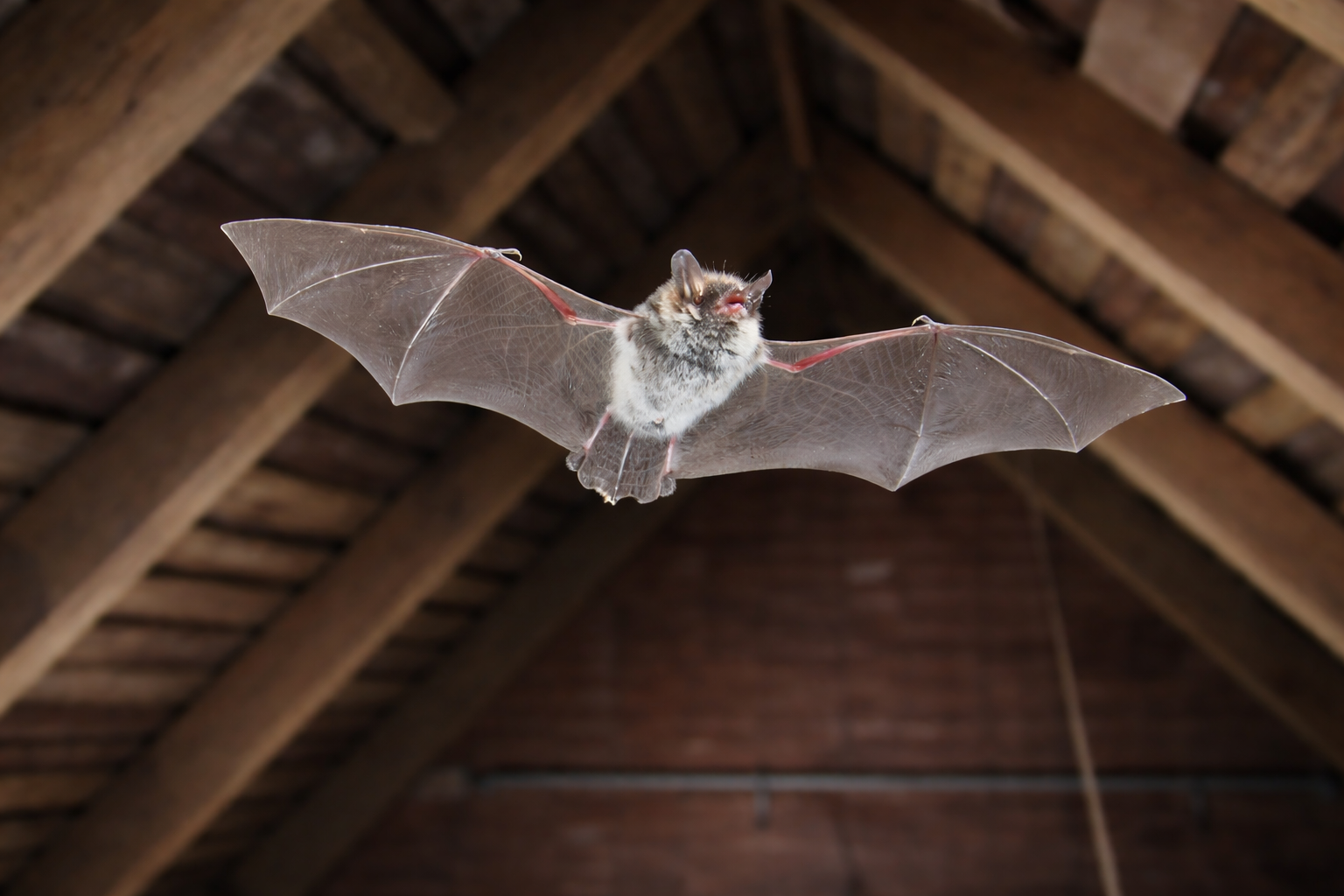
Why Acting Fast Matters When Bats Flying Inside House Becomes Your Reality
Bats flying inside house situations require immediate but calm action. Here's what you need to know right now:
Immediate Actions:
- Stay calm – Bats are more scared of you than you are of them
- Secure children and pets – Move them to another room immediately
- Open windows and doors – Give the bat a clear exit path
- Turn off lights – Dim lighting helps bats steer using echolocation
- Close interior doors – Confine the bat to one room
- Never touch the bat – Rabies risk, even from small bites
When to Call a Professional:
- Multiple bats present (indicates a colony)
- Bat appears injured or grounded
- Found during winter months (hibernation concern)
- Anyone may have been bitten
- Scratching sounds in walls or attic
One minute you're watching TV, and the next minute a bat zooms through your living room. This scenario happens more often than you'd think across the Kansas City Metro area. Bats are nocturnal mammals that use ultrasound waves vibrating at 20,000 times per second for navigation, but they can still become disoriented and accidentally fly through open windows or small gaps in your home's structure.
The good news? Most bat encounters involve a single confused animal looking for a way out, not a full infestation. However, knowing the difference and taking the right steps immediately can protect your family's health and prevent a minor incident from becoming a major problem.
Immediate Steps When You Find Bats Flying Inside House
Finding a bat flying around your living room can certainly be startling! We understand that your first instinct might be to panic or grab the nearest broom. However, the most effective approach for both your safety and the bat's well-being is to remain calm.
Stay calm and assess the situation:
A bat flying around can seem chaotic, but bats are not inherently aggressive. They use echolocation to navigate, emitting high-frequency ultrasound waves that vibrate at 20,000 times per second. This allows them to "see" objects with remarkable accuracy, even in the dark.
Secure children and pets:
Gently move children and pets into another room and close the door. This protects them from potential contact and reduces commotion.
Confine the bat to one room:
Close all interior doors leading to other parts of your house.
Open exits and dim lights:
Open all windows and exterior doors in the room where the bat is confined. Turn off bright lights. Bats prefer dimmer conditions and will follow clear exit paths.
Observe and wait:
Often, with a clear exit, the bat will fly out on its own. Avoid swatting or making loud noises.
How to Safely and Humanely Remove a Bat
If a bat doesn't find its way out after you've opened exits:
Gear up:
Always wear thick leather work gloves. A bat's tiny teeth can bite through regular cotton gloves.
Use a container:
Slowly approach the resting bat and place a plastic container or box over it.
Slide cardboard underneath:
This traps the bat safely without touching it.
Release outside:
Take the container outdoors, place it on an elevated surface (like a tree or fence post), tilt it open away from you, and let the bat fly off on its own.
Never use bare hands:
Even if the bat seems dead, do not touch it.
Health Risks and Rabies Concerns
Though rare, bats can carry rabies. This is why medical evaluation is crucial if:
- There's any possibility a bat bit or scratched someone
- A bat was found in a room where someone was sleeping
- A bat was near an unattended child or someone mentally impaired
- A pet may have had contact
Rabies signs in bats: Unusual daytime activity, disorientation, inability to fly, or overly approachable behavior. If you suspect rabies, contain the bat (don't kill it) and call animal control—the bat needs testing.
Bat droppings (guano) can also carry Histoplasma capsulatum, a fungus causing histoplasmosis—a serious respiratory illness.
Preventing Future Indoor Bat Encounters
Bats are incredibly agile and can squeeze through openings about the size of the end of your little finger—roughly 1/4 to 1/2 inch.
Common entry points:
- Gaps and cracks in fascia boards, soffits, or siding
- Unscreened attic vents or gable ends
- Loose flashing or deteriorated mortar around chimneys
- Openings where pipes or wiring enter the house
- Torn screens on windows or doors
One-way exclusion devices: For established colonies in attics or wall voids, we use devices that allow bats to exit but prevent re-entry. Once certain all bats have left, we permanently seal the entry points.
Maternity season and legal protections: Maternity season runs May through August. During this time, female bats give birth and raise flightless young. Attempting exclusion during this period can trap young inside, causing their death. Many bat species are legally protected—harm or killing is illegal.
Why did a bat enter my house?
- Baby bat season (summer): Young pups learning to fly can become disoriented
- Blocked roosts: If bats in your attic find their external exit blocked, they may enter the interior
- Open windows or doors: Especially during warm evenings with indoor lights attracting insects
- Disorientation: A sick or young bat might accidentally fly into an open entrance
- Seeking shelter/hibernation: In fall and winter, bats seek warm, sheltered spaces
Is it legal to kill a bat in my home?
No. Many bat species are protected by federal, state, and local laws due to their ecological importance and declining populations. The law requires humane eviction and exclusion methods, especially during maternity season (May–August).
When should I call a professional?
- Colony suspected (multiple bats or recurring appearances)
- Scratching or rustling in attic/walls
- Recurring entry
- Guano accumulation
- Suspected bite
- Injured or winter bat
- Uncertainty or discomfort handling yourself
Conclusion
Encountering bats flying inside your house can be stressful, but with the right knowledge and a calm approach, it's manageable. Bats are protected wildlife, and their removal should always be done humanely and in accordance with local regulations. At Frontier Trapper, we provide fast, humane wildlife removal throughout Overland Park, KS, and the entire Kansas City Metro area.