

Fox vs. Coyote: How to Tell Which One Is in Your Overland Park Yard
You caught a glimpse of a wild canine trotting across the yard at dusk, and now you want to know what it was. In Overland Park, that animal is almost always a red fox or a coyote, and people mix them up constantly. Getting it right matters more than it sounds, because the two behave differently, pose different risks to your pets, and call for different responses.
Start With Size
Size is the fastest way to settle it, once you account for how much of a fox is fur. A red fox looks dog-sized but weighs only about 8 to 15 pounds — much of its apparent bulk is a thick coat over a slender frame. A coyote is a genuinely larger animal, typically 25 to 45 pounds, standing knee-high with a rangy, athletic build. If the animal looked substantial and stood tall, you were probably looking at a coyote. If it looked delicate and light on its feet, a fox.
Look at the Coat and Markings
Color is the next clue:
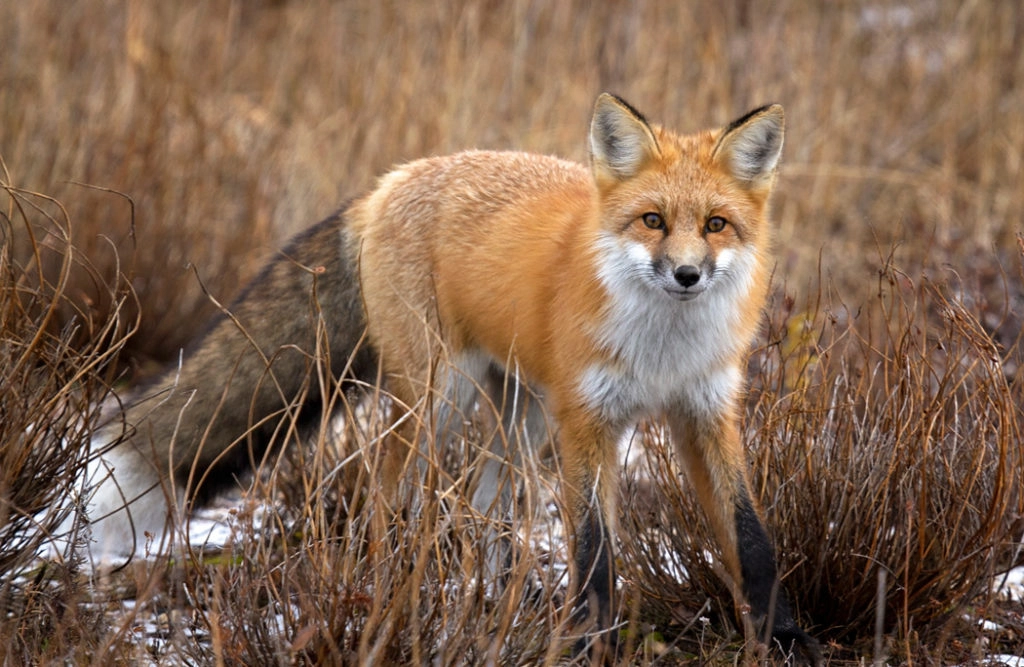
- Red fox: rusty reddish-orange coat, black lower legs that look like dark stockings, black-backed ears, and a bushy tail with an unmistakable white tip.
- Coyote: grizzled gray and brown, a mix of tan and gray that looks coarse, with rusty tones on the legs and ears and a lighter throat and belly.
- Gray fox (less common here): grizzled gray with rusty patches on the neck and sides and a black stripe down the tail ending in a black tip.
The white-tipped tail is the single most reliable fox marking. If you saw a bright white tip, it was a red fox — coyotes have a black-tipped tail.
Watch the Tail and the Gait
How the animal carries itself is a strong tell even at a distance. A red fox moves with a light, almost cat-like trot and carries its long, fluffy tail straight out behind it or low. A coyote moves with a smooth, purposeful, ground-covering trot and characteristically holds its bushy, black-tipped tail down and low — noticeably different from a domestic dog, which usually carries its tail up. If you saw a dog-like animal running with its tail held down, that points to a coyote.
Listen
The two sound completely different. Coyotes are famous for their group yips, barks, and rising howls, most often heard at night and sometimes in a chorus that signals more than one animal. Red foxes make a sharp, raspy scream and a series of barks, loudest during the winter breeding season — an unsettling sound many people mistake for an animal in distress. A drawn-out howl is coyote; a harsh scream is more likely fox.
The Quick Comparison
- Small, light, rusty-red with black legs and a white-tipped tail: red fox.
- Medium, tall, grizzled gray-brown with a black-tipped tail carried low: coyote.
- Cat-like, delicate trot: fox. Smooth, purposeful, ground-covering trot: coyote.
- Harsh scream and barking: fox. Group yips and rising howls: coyote.
- Denning under your deck or shed with kits: far more often a fox than a coyote.
Why the Difference Changes Your Response
This is where identification pays off. A fox is a shy, smaller predator whose conflicts usually center on a den under a deck or shed and predation on chickens, rabbits, and very small pets. A coyote is a larger, more capable predator, and the main concern is pet safety — cats and small dogs are genuinely at risk — along with the danger of a food-conditioned coyote that has lost its fear of people. Both can carry rabies and other diseases, and neither should be approached, but the level of caution and the plan differ.
Not sure which one you have, or dealing with either? We identify the animal, assess the risk to your pets and property, and handle removal humanely and legally.
Explore Fox Removal in Overland ParkWhy Overland Park Gets Both
Both animals thrive along the edges where suburb meets open ground, and Johnson County is full of that habitat. Creeks, greenbelts, golf courses, parks, and drainage corridors give foxes and coyotes travel routes and cover, while pet food left outdoors, unsecured garbage, fallen birdseed, and the rabbits and rodents those attract provide an easy food supply. In town, both animals face little pressure and can lose their natural wariness, which is when they settle into yards and neighborhoods.
What to Do Either Way
Whichever you have, the core steps overlap:
- Remove the food. Feed pets indoors, secure garbage, clean up fallen birdseed and fruit, and never feed wild canines.
- Protect pets. Supervise or leash cats and small dogs, especially at dawn, dusk, and overnight.
- Secure poultry and rabbits. Use a predator-proof enclosure with buried wire and lock animals in at night.
- Reduce cover and den sites. Clear brush and wood piles and close off spaces under decks and sheds.
- Never approach or feed either animal. Report any fox or coyote that seems tame, bold, disoriented, or active and unafraid in daylight, which can indicate rabies.
If a fox is denning under your deck, a coyote has grown bold, or you simply cannot tell what is visiting and want it handled, Frontier Trapper can identify the animal and resolve it safely. For the larger predator specifically, our guide on whether coyotes are dangerous covers the pet-safety side in more depth.